Wednesday, April 22, 2015

Earth Day, April 22, 2015

Class Work

1.A.  What are you doing to celebrate Earth Day 2015 . . . That is today!
Here's what is going on around the world:
http://www.earthday.org/greencities/events/

Take the next five minutes to read through the activities. Pick two or three of your favorites. Talk to your writing friends at your table and explain why you liked the events. Also explain what the goals for the event were and if you think the activity will help to achieve those goals. A whole class discussion will follow.

B. Take the "footprint" quiz. What can you personally do that will make a difference? Write your thoughts on the notecard. Leave it with me before leaving class.
http://www.earthday.org/splash_page.php

C. See what NYC is doing: http://news.yahoo.com/york-aims-cut-waste-90-percent-2030-065527582--finance.html

D. Stand for Trees: http://finance.yahoo.com/news/dear-future-generations-sorry-143100425.html;_ylt=AwrXgiIE6DdVOHsAcKrQtDMD;_ylu=X3oDMTByb2lvbXVuBGNvbG8DZ3ExBHBvcwMxBHZ0aWQDBHNlYwNzcg--

This one is much like the Jacque Cousteau article where he warns us that if we do not do something, we will die from lack of oxygen on the top of a very crowded mountain.

E. Join the EMCC bottle cap project.
PLASTIC BOTTLE CAP
PROJECT
COORDINATOR:  TERI DENMAN
St. Vincent de Paul, through EMCC’s Beta Alpha Xi chapter is currently
hosting this project of collecting plastic bottle caps to assist them with
their community service.  For each plastic bottle cap turned in, one
minute of chemotherapy will be provided free
of charge to those who are unable to afford
this type of treatment.
We are currently collecting:
Any kind of plastic bottle cap
 Water bottles (from small to gallon)
 Medicine bottle caps
 Food bottle caps
There is a box in the Phi Theta Kappa office, MON 122.

Bring them to class. A jar is waiting! We will collect until the day of the exam.
or
Participate in the Earth Week Scavenger hunt at EMCC
 http://www.estrellamountain.edu/sustainability/earthweek 
www.estrellamountain.edu/sustainability/earthweek

Let's look at the art. . . volunteers, please! Earn 3 extra points on either the essay or the visual for sharing today.

2. Please get out copies of your presentation visuals. This was the homework:
Guidelines for the presentation:
PowerPoint or Prezi Slides or contents of a brochure.
  • 1 Title Page to include your name , date and  title of your presentation
  • 2-3 defining and/or describing the problem. Prove that a problem exists.
  • 2-3 sharing the causes of the problem.
  • 2-3 explaining the effects of the problem
  • 2-3 giving solutions and calling us to action!
  • 1 Works Cited page.

If you prefer, you may complete one of the following in place of a PowerPoint presentation:

  • 1. Brochure - you must cover the same items as listed in the PowerPoint requirements. You will need 26 brochures - one per student and one for me.
  • 2. Video show - again, you must cover the same information. Make sure that it will play on the college technology.
  • 3. Clear other options with me . . .

All presentations will be 5-7 minutes. We will begin on Monday. Be sure to sign up on Wednesday. Bring in the draft of your PowerPoint, Prezi, video, brochure, etc. for an editing activity.
3. Using the PowerPoint editing sheet, look at the document so far. If a person decided to create a brochure or video, you need to look for the same items. You do not need to look for a specific number of slides.

Find a partner who shares your birth month. Share your work. Comment on the pink sheets.

4. Sign up for Monday's presentations before you leave class. If you don't sign, you will be assigned a slot.

5. Spend the rest of class working on your presentation or working on the final draft of your essay. I will be visiting tables to take a look at your essays. I want to see your in-text citations and works cited pages. Please have them ready for review - paper or electronic.

Homework:
A. Complete your Visual for Monday's presentation. Post in CANVAS. (100 pts...50 for the visual/50 for the presentation.)

B. Polish your essay and post the final draft in CANVAS by Monday. (100 pts.)

Monday, April 20, 2015

Class Work

1. Peer Editing Activity - you need a paper copy of your draft. Print away!
2. In-text citations . . . remember to include these in your essay! 
Tips: http://bcs.bedfordstmartins.com/resdoc5e/RES5e_ch08_s1-0001.html
https://owl.english.purdue.edu/media/pdf/20090701095636_747.pdf

3. The final copy is due one week from today - April 27, 2015. Post in CANVAS.

2. Guidelines for the presentation:
PowerPoint or Prezi Slides:
  • 1 Title Page to include your name , date and  title of your presentation
  • 2-3 defining and/or describing the problem. Prove that a problem exists.
  • 2-3 sharing the causes of the problem.
  • 2-3 explaining the effects of the problem
  • 2-3 giving solutions and calling us to action!
  • 1 Works Cited page.

If you prefer, you may complete one of the following in place of a PowerPoint presentation:

1. Brochure - you must cover the same items as listed in the PowerPoint requirements. You will need 26 brochures - one per student and one for me.
2. Video show - again, you must cover the same information. Make sure that it will play on the college technology.
3. Clear other options with me . . .

All presentations will be 5-7 minutes. We will begin on Monday. Be sure to sign up on Wednesday. Bring in the draft of your PowerPoint, Prezi, video, brochure, etc. for an editing activity.


Today, we will look for some art to enhance the presentations:

Looking at Art

· What is the title of the work? How does the title help you to understand the message? What is the message?

· How does this work relate to your topic? Discuss.

· What is the most obvious image in the work. To where is your eye drawn?

· Look at the colors. Are they symbolic? Would the message be different if the colors were different? Explain.

· Study the shading and shadowing. How do these elements impact the overall message?

· How do the lines and angles impact your eye as you study the work?

· Who is the artist? When was the work created? Is the artist's message about a specific event in history? What was going on in the world when the work was created? Is the art universal - speaks to people of all times and in all places, or is it limited to the audience for whom it was created.

· How does the work relate to us in 21st century America?
 
Post in CANVAS by Wednesday.
FYI:
PowerPoint Tips
Remember that an effective PowerPoint presentation should follow these guidelines.
Create three slides for your presentation.

Have two students "proof" your work using the chart like the one below. You need to have two or three sides finished!

Layout
· Photographs, graphic design, and clip-art are useful and enhance the presentation
· Title, author, and course identification are on the first slide
· Works Cited page is the last frame and is in MLA format
Fonts
· Font size is at least 16
· Footless Font is used
· Color is of a deep enough contrast to be easily read
· Font colors are limited to three or four throughout the presentation
Text
· Bulleted points are limited to no more than six per slide
· Six or fewer words per bullet are used
· Headlines are effective
· Spelling is correct
· Punctuation is correct
· End punctuation or no end punctuation is consistent when using bullets
· Upper and lower case is used correctly
· Animation is limited and necessary
· Sound is limited and effective
Content
· A work of art is included
· Point/thesis is clear
· Supporting elements are evident
· Introduction captures the attention of the audience
· Conclusion contains a strong message
· Clear steps for a “call to action” are obvious

Wednesday, April 15, 2015

April 15, 2015 - Wednesday

Class Work

1. Let's share the "effects" fishbone charts.
  • Share first at your tables . . . 1:29 seconds each
  • Now, stand up and find someone NOT at your table. Meet in the middle of the room or on the sides or in the front (Is there a front?) or in the back. Share the "bones!"
2. Return to your seats. Let's talk about solutions. What are some possible solutions to the problem you are studying? Write notes on the back of your "effects" fishbone chart as we go over these points.
  • What will it cost to solve the problem?
  • How much time will it take to help?
  • How easy will it be to solve the problem?
  • How long will it take for the solution to work?
  • Is your solution socially acceptable? (Remember the line about dispatching deer to save the herd?)
  • Is your solution legal?
  • What do experts say?
  • What has already been tried.
  • Who needs to be convinced that the solutions need to happen?
  • What other solutions might be considered? Why is yours the best? (Remember the birth control for deer idea? The author explained why it would not work.)
If you don't have answers to these points right now, please conduct research.


3. Organize your thoughts.
  • Introduce and define the problem.
  • Provide information about the causes.
  • Provide information about the effects.
  • Now is the time to share solutions.
  • Consider adding a final segment that notes the benefits. What will be gained by following your plan?

4. Did you follow these steps?
http://www.enotes.com/topics/essay/essay-writing-tips/how-write-problem-solution-essay
#8 is a must! What other steps have you done? What step should be your next?

Homework: 

Write the draft of your essay. Pay attention to the order listed in #3 above. Post your draft in CANVAS by Monday. Be sure to document your sources. We will polish the in-text citations later. You need to know where you found the information that you borrowed.


Preview of coming attractions. . .

You will also create a PowerPoint or Prezi presentation and share with the class. As you work on the draft, think about the major points you will include in a PowerPoint or other presentation format. If you come across interesting graphs, charts, illustrations, etc. that would add visual interest to your presentation, keep track of the sources. We will go over the presentation requirements on Monday.

Just for fun. . . "So Earth Had This Boyfriend" - using humor in writing.

Monday, April 13, 2015

Monday - April 13, 2015

Class Work

This was the homework. Please take out your charts!
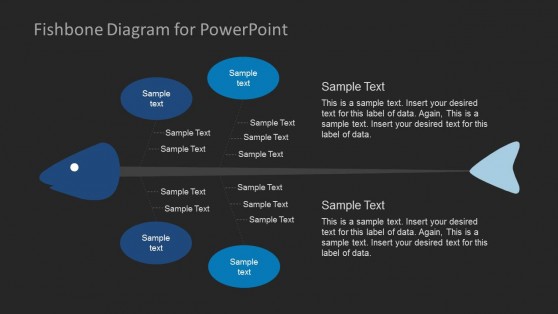
Homework: Create a "fishbone" of the causes of the problem you have selected to study.  You do NOT have to focus on Global Warming. This is just a sample. Your topic will take the place of the yellow Global Warming strip. (25 points) (Submit a paper copy on Monday.)


A. Did you list your top at the end of the fishbone?
B. Share your topic and causes with the others at your table.

Today we will consider some of the effects of the issues. To do this, flip the fishbone chart!

This is a sample only. You will focus on the effects of your chosen topic.


Reading sample essays . . .

"Practical Wildlife Management"

1. What do you know about deer as a problem?
2. What critters cause problems here in the Phoenix area?
3. What solutions might work?

After reading the essay, we will look at 16 easy steps for writing a problem-solution essay.

Homework.

1. Create an "effects" fishbone for your topic. Bring the paper to class.
2. Research possible solutions to your chosen topic. Bring three possible solutions to class on Wednesday. Be sure you have the URLs for the sources of your solutions.  (Paper copy)

Wednesday, April 8, 2015

April 8, 2014 - Wednesday

Class Work

1. We will finish viewing An Inconvenient Truth. There will be time to discuss the answers to the questions. Please post your answers by Monday. You do not need to write the questions. You do need to number your responses and answer in complete sentences. (40 points)

2. As time permits, we will work on the following:
3. Homework: Create a "fishbone" of the causes of the problem you have selected to study.  You do NOT have to focus on Global Warming. This is just a sample. Your topic will take the place of the yellow Global Warming strip. (25 points) (Submit a paper copy on Monday.)


Monday, April 6, 2015

Monday, April 6, 2015

Class Work

We will continue watching An Inconvenient Truth. Look for:
1. The answers to the questions. (paper handout)
2. Effective presentation techniques
3. Techniques you did not like.

Homework

Start thinking about a topic related to nature. Your task will eventually be to persuade the class that your topic is worth fighting for. What is worth changing? What is worth saving?

On CANVAS, list your possible topic along with a paragraph that explains why you selected the topic.

Wednesday, April 1, 2015

April 1, 2015 - Wednesday

Class Work - NO JOKE!

1. Finish the presentations.
2. The quiz will be Monday. Review the rules as taught.
3. Photo time! What is Mother Nature saying! Work with a partner or work alone. In 10 minutes, take 10 pictures of Mother Nature! Return to class.  On the sheet provided, make brief notes about each photo. For each photo, write a caption. Think of the caption as a conversation with Mother Nature. What is the message? (Discussion to follow.) Be sure your name is on the green sheet. Submit the green paper.
4. Begin viewing "An Inconvenient Truth." This is a Nobel Peace Prize winning documentary. Kindly put political views aside and listen to the information and watch how it is presented.

Homework

Read the articles. Note key words, phrases, and points. Do NOT write the summary yet. It is not due until April 8. Instructions will be given on Monday, April 6, 2015.

Read: "Did
1. "Al Gore Warm Up to a Very Hot Topic" by Kevin Crust

http://articles.latimes.com/2006/may/24/entertainment/et-truth24
Be sure to read the entire article. You have to forward to page 2.


2. "Did Al Get the Science Right?" by Katharine Mieszkowski
http://www.salon.com/2006/06/10/truths/


3. "Warning of Calamities and Hoping for a Change by A. O. Scott
http://www.nytimes.com/2006/05/24/movies/24trut.html?_r=0

Assignment:
A. Write a summary of each article. Be sure to note the items with which you agree and the items with which you disagree.
B. Make a list of three phrases or points from each essay that you found to be powerful and persuasive.

You will submit three summaries and nine key phrases or points.

If you need to review summary writing, click here! http://academics.smcvt.edu/cbauer-ramazani/AEP/EN104/summary.htm